
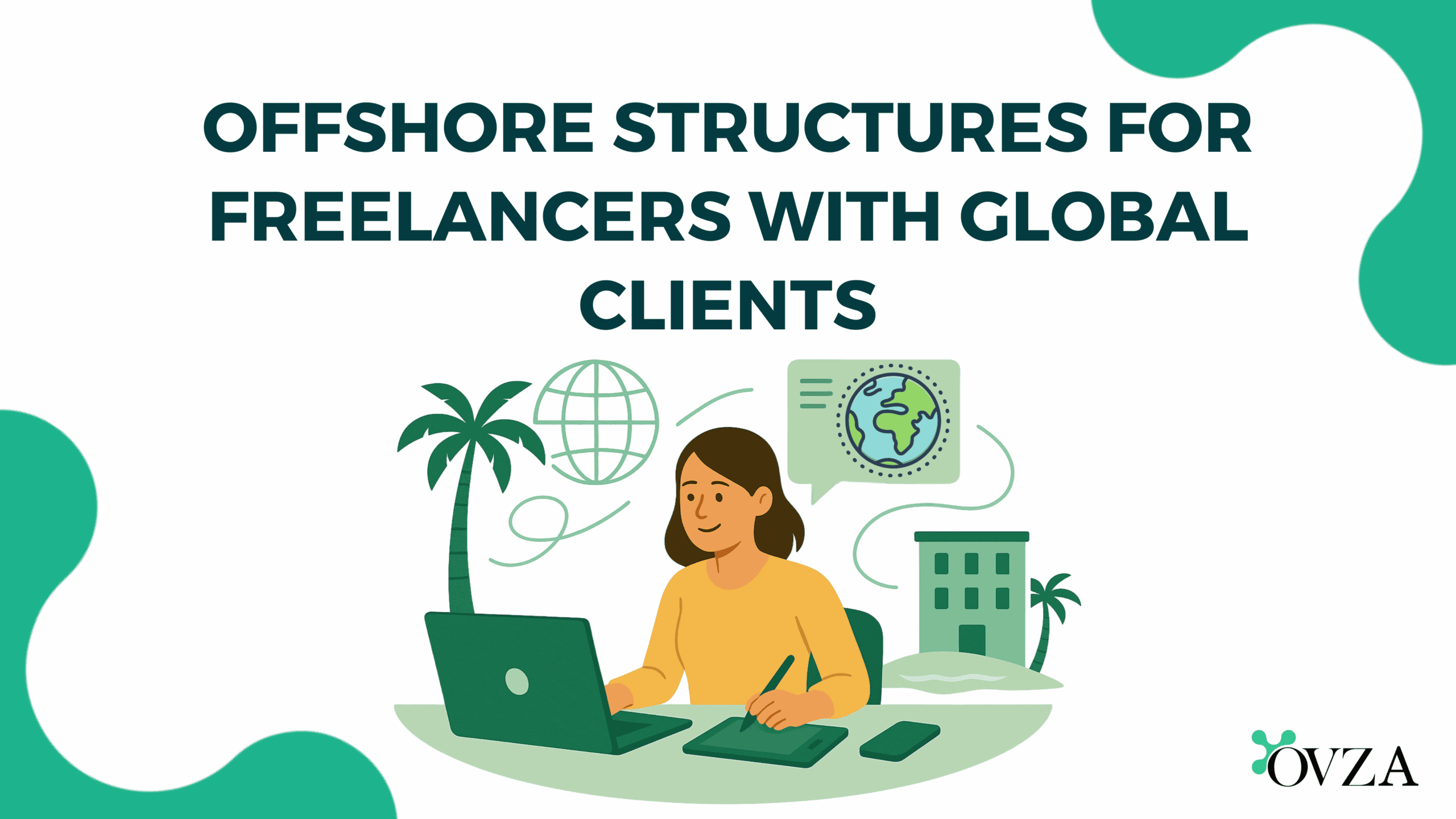
Offshore structures for freelancers with global clients have become one of the most effective ways for independent professionals to operate internationally.
As more freelancers work with clients in the United States, Europe, Asia, and the Middle East simultaneously, they face a common challenge: every country tries to tax the same income, every payment processor applies different restrictions, and traditional business structures simply don’t match the fluid nature of remote global work. This is why offshore structures for freelancers with global clients have become increasingly popular, especially in jurisdictions like Seychelles, which is the most affordable, efficient, and widely used solution.
Freelancers today often function like micro-multinational businesses. A graphic designer in one country may work for a U.S. marketing agency, a European startup, and an Asian e-commerce brand, all while receiving payments through multiple platforms. Without a centralised corporate structure, this creates tax exposure, accounting challenges, and difficulties opening international bank accounts.
Offshore structures for freelancers with global clients solve this by providing a stable, neutral, tax-free entity through which all client payments can be received cleanly and professionally.
Why Freelancers Are Choosing Offshore Structures
Freelancers choose offshore structures because they provide legitimacy, stability, and financial efficiency. Offshore structures for freelancers with global clients allow a single Seychelles IBC to invoice clients anywhere in the world, receive payments in multiple currencies, and operate without the tax burdens or reporting complications of domestic business entities. This creates a clean operational foundation that freelancers simply cannot achieve through personal accounts or local sole-proprietor setups.
Another reason freelancers are moving toward offshore structures is payment reliability. International clients often hesitate to send large transfers to personal accounts because it appears informal and offers no corporate protections. Offshore structures for freelancers with global clients allow a freelancer to operate like a proper business, with invoices, contracts, receipts, and a corporate identity that increases trust and reduces payment disputes.
Seychelles, being the cheapest (Starting at USD 595), simplest, and most efficient offshore jurisdiction, has become the primary choice for freelancers. It offers a tax-free environment for foreign income, fast incorporation, global privacy protections, and straightforward banking options. Through a Seychelles IBC, freelancers can route all global payments into one legal entity, making bookkeeping simpler and eliminating the confusion of receiving cross-border transfers into multiple personal accounts.
Offshore structures for freelancers with global clients also support long-term scalability. A freelancer who begins as a solo operator often grows into a small agency, digital consultancy, or multi-contractor operation. Offshore companies allow easy addition of new shareholders, issuance of shares, contract outsourcing, and access to international payment platforms that personal accounts cannot use. This means freelancers can expand their operations globally without needing to restructure later.
Professional Address and Invoicing Solutions for Offshore Freelancers
One of the biggest concerns freelancers have when using an offshore structure is how their invoices and business documents will appear to clients. Offshore structures for freelancers with global clients work perfectly for tax efficiency and international operations, but many freelancers prefer a professional, familiar address on their invoices rather than listing an offshore jurisdiction. This is extremely common, and there is a very simple solution that integrates seamlessly into the offshore model.
Freelancers can operate their tax-free Seychelles IBC while using a UK virtual office address as their outward-facing business location. This allows the freelancer to keep the legal benefits of offshore structures for freelancers with global clients, while still presenting a polished, mainstream business identity toward Europe, the UK, North America, or any market they serve. Offshore companies can legally issue invoices using a virtual office address as long as the invoices clearly show the correct company name and registration number.
A UK virtual office is particularly effective because it gives a clean, trusted, professional impression. Clients see a normal London address and assume the business operates like any other consultancy, agency, or boutique service provider. This is why offshore structures for freelancers with global clients often combine Seychelles incorporation with a UK virtual office, Seychelles provides the tax-free legal structure, while the UK address enhances branding, professionalism, and credibility.
The combination is extremely powerful. Your Seychelles IBC remains your actual corporate vehicle and enjoys zero tax on foreign income, zero reporting, and global operational freedom. Meanwhile, your invoices, letterhead, website footer, and corporate communications can display the UK virtual office address. This means that clients see a standard European business, while you legally benefit from offshore structures for freelancers with global clients and the significant tax efficiencies that come with them.
In addition, freelancers who want a complete professional setup can also obtain a European or UK online bank account alongside their Seychelles IBC. Many fintech institutions in Europe allow offshore company onboarding, especially when paired with a UK virtual office address. This creates a unified image: a UK address and a UK/European bank account supporting a Seychelles tax-free company behind the scenes. From the client’s perspective, everything looks like a standard UK-based service provider, while the freelancer gains the strategic advantages of offshore structures for freelancers with global clients.
Banking Access for Freelancers Using Offshore Structures
Banking is one of the most important elements of offshore structures for freelancers with global clients, and it is absolutely possible to obtain functional, compliant international banking. Freelancers often receive payments from multiple platforms, regions, and currencies, which makes traditional domestic banking restrictive and unpredictable. Offshore structures for freelancers with global clients solve this by offering multi-currency accounts, faster settlement, and access to financial institutions that understand cross-border income.
Some offshore banks and EMIs are more flexible than others, especially when the business model involves creative work, consulting, development, marketing, or digital services. Through our network of partner financial institutions, we can identify the banks most likely to approve an offshore freelancer company, especially those that are familiar with Seychelles IBCs. Offshore structures for freelancers with global clients become significantly more effective once the right banking partner is selected, which is exactly where OVZA provides strong value.
With proper matching, freelancers operating an offshore company can receive international transfers, issue invoices globally, manage client payments without currency restrictions, and access modern fintech platforms. This gives them more freedom than a domestic freelancer structure, especially for those whose clients are spread across North America, Europe, Asia, and the Middle East.
Conclusion
Offshore structures for freelancers with global clients offer a modern, efficient solution for professionals who work internationally. By incorporating in a jurisdiction like Seychelles, freelancers gain tax efficiency, strong legal protection, global banking flexibility, and the ability to invoice clients anywhere in the world without geographic limitations. For cross-border freelancers, an offshore company is not only a business structure but a practical strategy for stability, privacy, and long-term scalability.
Disclaimer: The information provided on this website is intended for general reference and educational purposes only. While OVZA makes every effort to ensure accuracy and timeliness, the content should not be considered legal, financial, or tax advice.