
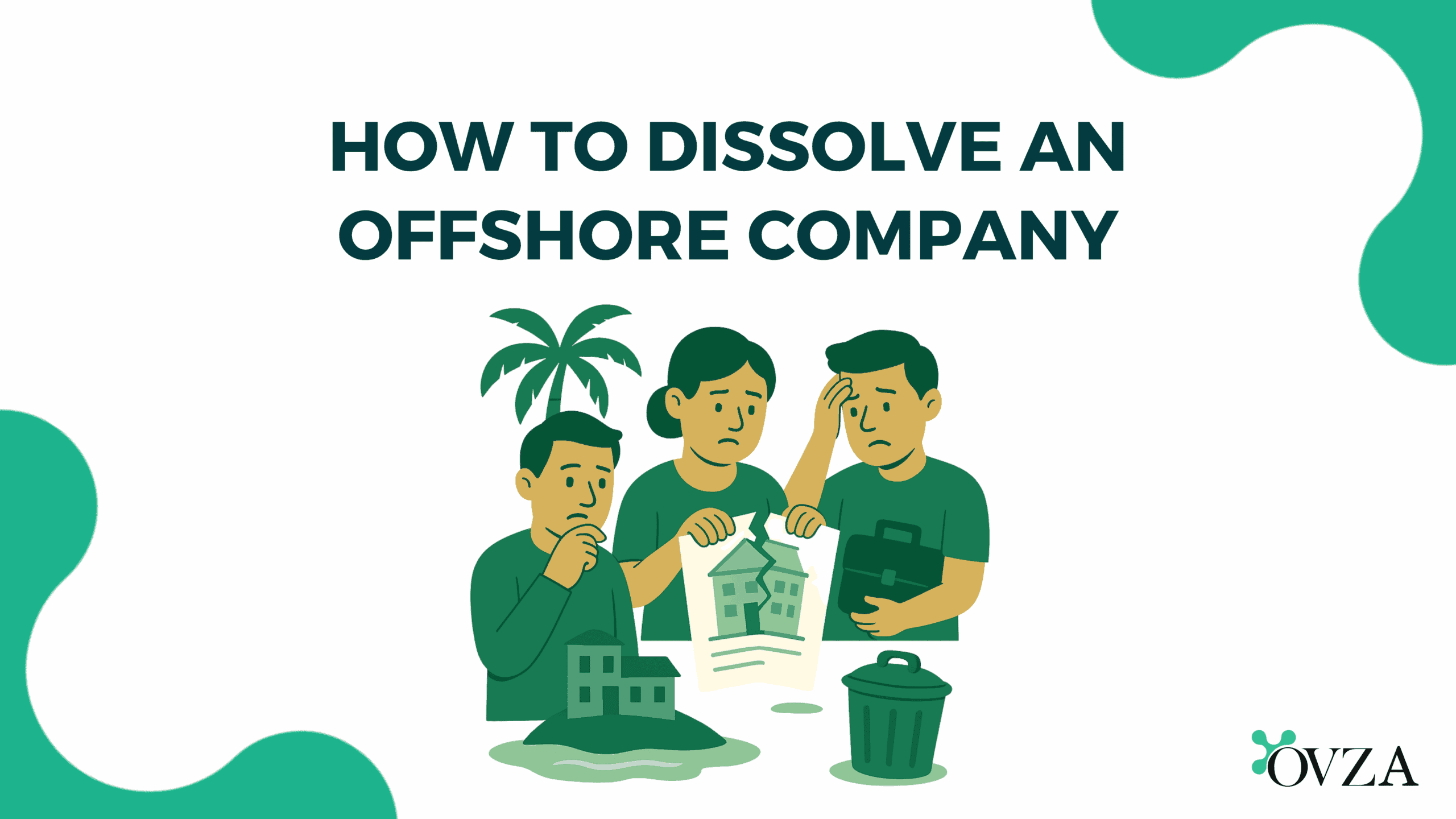
Dissolution of an offshore company with full compliance to corporate, tax, and international reporting requirements. The dissolution of an offshore company involves a formal legal process governed by the corporate, tax, and regulatory frameworks of the jurisdiction in which the entity was incorporated. Whether the company was established in the British Virgin Islands, the Cayman Islands, Seychelles, or another offshore center, dissolution must comply with statutory provisions concerning corporate liquidation, reporting obligations, and tax clearance. Offshore jurisdictions regulate the termination of legal entities through company registrars, financial supervisory authorities, and statutory compliance mechanisms.
The legal and procedural steps for dissolving an offshore company typically include board resolutions, creditor settlements, public notices, and deregistration from corporate registers. Compliance with international transparency frameworks such as the OECD’s Common Reporting Standard (CRS) and the United States’ Foreign Account Tax Compliance Act (FATCA) ensures that the dissolution process adheres to global disclosure standards.
Legal Framework Governing Offshore Company Dissolution
The legal foundation for dissolving an offshore company is rooted in the corporate statutes of the jurisdiction of incorporation. Offshore jurisdictions such as the British Virgin Islands operate under the BVI Business Companies Act 2004, while the Cayman Islands follow the Companies Act (2023 Revision). These statutes establish the procedures through which a company may be voluntarily or compulsorily dissolved. Voluntary dissolution typically arises when the company has fulfilled its purpose or when its directors and shareholders decide to terminate operations. Compulsory dissolution, by contrast, may occur by order of the court or the registrar when statutory filings or regulatory obligations are not met.
The dissolution process begins with a board resolution authorizing the termination of the company’s legal existence. This resolution must comply with the internal governance provisions of the offshore jurisdiction’s corporate law and the company’s memorandum and articles of association. Directors must declare that the company has no outstanding debts or contingent liabilities and that all business operations have ceased. If debts remain, the company may be required to enter into a liquidation process under statutory supervision, often involving the appointment of a licensed liquidator.
Legal dissolution also requires notification to the corporate registrar and submission of prescribed forms detailing the company’s financial position. In many jurisdictions, the registrar will not approve dissolution until the company provides evidence of tax compliance and clearance from local revenue authorities. The statutory framework ensures that creditors, employees, and governmental entities are protected against unlawful dissolution, thereby reinforcing the integrity of offshore corporate governance.
Offshore tax compliance plays a central role in this process. Before dissolution is finalized, companies must satisfy all obligations under international tax cooperation agreements, including reporting under the OECD’s Common Reporting Standard (CRS) and FATCA. These frameworks ensure that information on offshore financial accounts is automatically exchanged between jurisdictions, preventing the use of dissolution as a mechanism to conceal taxable assets or income.
The statutory and regulatory landscape governing offshore company dissolution thus establishes a structured process that balances the rights of shareholders with the interests of creditors and regulators. It also ensures that the termination of an entity is conducted transparently and in compliance with international financial reporting standards.
Procedural Steps in Offshore Company Dissolution
The dissolution of an offshore company involves a sequence of procedural steps designed to ensure that the termination of legal existence is conducted lawfully and transparently. While the specific procedures may differ depending on jurisdiction, the process generally includes resolutions by the directors and shareholders, settlement of outstanding obligations, notification to regulatory authorities, and the formal removal of the company from the register of corporations.
The process typically begins with a formal board meeting where directors resolve to recommend dissolution to the shareholders. The board must declare that the offshore company has ceased operations, possesses no outstanding debts, and has settled all contractual and tax liabilities. Once this declaration is made, a shareholders’ resolution is passed approving the voluntary winding-up. In many jurisdictions, such as under the BVI Business Companies Act 2004, this resolution must be filed with the Registrar of Corporate Affairs to initiate the dissolution process.
A critical step involves the appointment of a liquidator when the company has any remaining assets or liabilities. The liquidator is legally responsible for collecting and realizing assets, discharging liabilities, and distributing the balance to shareholders. Under the Cayman Islands Companies Act (2023 Revision), the liquidator must prepare a final account showing the manner in which the winding-up was conducted and the assets distributed. This document is filed with the registrar to demonstrate that all legal and financial obligations have been fulfilled.
Public notification of dissolution is another mandatory step in most offshore jurisdictions. The company must publish a notice of intent to dissolve in an official gazette or newspaper, providing creditors and stakeholders an opportunity to present claims before the company’s legal existence is terminated. This notice period typically ranges from thirty to ninety days, depending on local corporate law. Failure to issue proper notice can invalidate the dissolution process and expose directors to potential liability.
Tax clearance certificates must also be obtained from local tax authorities to confirm that all tax obligations have been met. Offshore companies must demonstrate compliance with reporting requirements under international frameworks, including the OECD’s Common Reporting Standard (CRS) and FATCA. Jurisdictions participating in these initiatives require offshore entities to provide final financial statements and account closures before granting approval for dissolution.
Once all statutory obligations are satisfied, the registrar issues a certificate of dissolution, formally confirming that the offshore company has ceased to exist as a legal entity. This certificate serves as conclusive evidence of dissolution, terminating the company’s capacity to enter into contracts, hold property, or engage in any form of legal proceedings.
Through these procedural steps, offshore jurisdictions ensure that the dissolution process is transparent, properly documented, and compliant with both domestic and international legal standards. The procedural rigor not only protects creditors and shareholders but also preserves the jurisdiction’s integrity within the international financial system.
Compliance, International Reporting, and Post-Dissolution Considerations
Compliance obligations and post-dissolution responsibilities play a decisive role in ensuring that the winding-up of an offshore company adheres to both domestic legal standards and international financial regulations. Offshore jurisdictions impose strict requirements on financial reporting, data retention, and regulatory disclosures to prevent the misuse of dissolution as a method of concealing assets or avoiding tax reporting obligations.
Once the dissolution process has been initiated, the company and its appointed liquidator must ensure full compliance with financial disclosure laws. These obligations include the submission of final tax returns, deregistration from applicable tax authorities, and the filing of termination reports with corporate registries. In jurisdictions such as the British Virgin Islands and the Cayman Islands, company records must be retained for a prescribed statutory period following dissolution—commonly five to seven years—to facilitate regulatory review if necessary. This requirement reflects the ongoing legal accountability that extends beyond the company’s formal existence.
International reporting remains a crucial component of offshore company dissolution. Jurisdictions that have implemented the OECD’s Common Reporting Standard (CRS) and the Foreign Account Tax Compliance Act (FATCA) are obligated to exchange information on financial accounts, beneficial ownership, and corporate transactions. Even during dissolution, these reporting duties persist until the company’s legal status is fully terminated and all accounts are closed. This international transparency ensures that offshore tax benefits are not exploited during or after the dissolution process.
Additionally, directors and shareholders must consider residual legal risks after dissolution. Many offshore jurisdictions maintain statutory provisions allowing claims to be brought against a dissolved company within a specific timeframe, provided that assets are later discovered or liabilities emerge. Under such provisions, courts may restore a company to the register solely for the purpose of addressing these unresolved matters. This legal mechanism underscores the continuing responsibility of directors and shareholders to ensure that the dissolution process is comprehensive and compliant with applicable law.
Post-dissolution, former company officers are often required to confirm that all client records, accounting documents, and tax filings are archived in accordance with local and international data preservation requirements. Failure to comply can result in administrative penalties or disqualification from serving as company officers in future offshore entities.
The dissolution of an offshore company thus extends beyond administrative closure—it encompasses legal, tax, and compliance dimensions that ensure transparency, accountability, and alignment with global financial integrity principles.
Conclusion
Dissolving an offshore company is a legally regulated process that demands meticulous adherence to statutory procedures, financial obligations, and international compliance standards. The steps—from board resolutions and liquidation to final deregistration—must conform to jurisdiction-specific corporate laws such as the BVI Business Companies Act 2004 and the Cayman Islands Companies Act (2023 Revision). Compliance with international frameworks, including the OECD’s Common Reporting Standard (CRS) and FATCA, ensures transparency and reinforces the legitimacy of the dissolution process.
Proper dissolution safeguards directors, shareholders, and creditors by confirming that all legal and financial obligations are fulfilled. When executed correctly, it brings closure to corporate operations, prevents future liabilities, and upholds the integrity of the offshore financial system. Offshore company dissolution is therefore not merely a procedural act but a legally significant process that ensures compliance, transparency, and the lawful termination of corporate existence.
Disclaimer: The information provided on this website is intended for general reference and educational purposes only. While OVZA makes every effort to ensure accuracy and timeliness, the content should not be considered legal, financial, or tax advice.